What Information Do You Need to Send Money Internationally from Canada?
Sending money abroad can be straightforward when you have the correct information ready. A missing bank code, an incorrect account number, or a name that does not match the recipient's identification can delay a transfer or cause it to fail.
The exact requirements depend on the destination country, transfer provider, and delivery method. A bank deposit usually requires more banking information than a cash pickup or mobile wallet transfer.
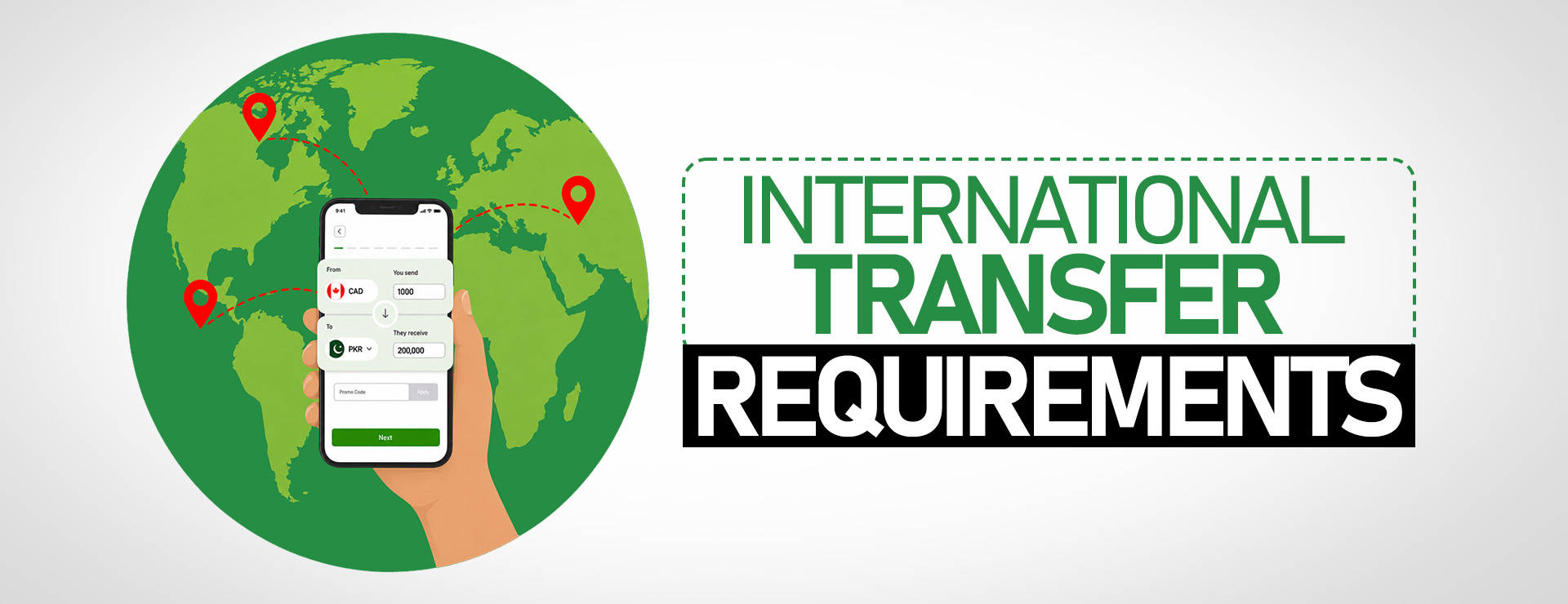
This guide explains what you may need when sending money internationally from Canada and how to prepare before starting.
1. Your Personal Information
You will usually need to provide basic information about yourself when creating an account or making an international transfer. This helps the provider confirm who is sending the money and meet Canadian identity verification requirements.
You may be asked for:
- ● Your full legal name
- ● Date of birth
- ● Residential address
- ● Phone number and email address
- ● Occupation or source of income
Enter your name exactly as it appears on your official documents. Avoid shortened names, nicknames, or different spellings.
The provider may also ask why you are sending the money or how you know the recipient.
These questions are a normal part of reviewing international transfers.
2. Valid Identification
Depending on the transfer amount, account activity, and provider, you may need to verify your identity. This may happen during registration, before your first transfer, or when you send a larger amount.
Accepted documents may include:
- ● A Canadian passport
- ● A provincial or territorial driver's licence
- ● A permanent resident card
- ● Another valid government-issued photo ID
The document should be current, clear, and readable. Its name and date of birth should match the details entered in your account.
Online services may ask you to upload a photo of the document and take a selfie. An expired document or unclear image can slow down verification.
3. The Recipient's Full Legal Name
The recipient's name should match the name on their bank account or government-issued identification.
You will normally need their first name, middle name when applicable, and last name. For a bank deposit, the name should match the account holder's records. For cash pickup, it should match the identification shown at the collection point.
Even a small difference can lead to additional checks. Ask the recipient to send their name exactly as it appears on their documents rather than relying on memory.
4. The Recipient's Address and Contact Details
Some providers require the recipient's home address, phone number, or email address. The information requested varies by destination and transfer method.
You may need:
- ● Street address
- ● City, province, state, or region
- ● Postal code and country
- ● Mobile phone number
- ● Email address
A working phone number is especially important for cash pickup or mobile wallet delivery. It may be used to send a notification or reference number. Make sure the correct country code is included.
5. Bank Account Information
For a direct bank deposit, you will need accurate information about the recipient's account and bank.
This may include:
- ● Bank name and branch
- ● Account holder's name
- ● Account number
- ● Account type
- ● SWIFT or BIC code
- ● IBAN, where used
- ● A country-specific routing code
A SWIFT or BIC code identifies a bank within an international payment network. An IBAN identifies a bank account in countries that use the IBAN system.
Some countries use different codes. Transfers to the United States may require an ABA routing number. India may require an IFSC code, Mexico may use a CLABE number, and the Philippines may require a bank routing code.
Do not guess these numbers. Ask the recipient to copy them from their banking app, bank statement, or official account document.
The exact information required may vary depending on the transfer provider, destination country, and delivery method. When sending money through Remit5, customers are guided through the required sender and recipient information during the transfer process.
6. Cash Pickup or Mobile Wallet Details
Not every transfer goes to a bank account. Depending on the destination, the recipient may be able to collect cash or receive money in a mobile wallet.
For cash pickup, you may need the recipient's legal name, city, phone number, and selected pickup location. The recipient may need to show valid identification and provide a transfer reference number.
For a mobile wallet transfer, you may need the recipient's name, mobile number, wallet provider, and wallet account number. Confirm that the wallet is active and can receive the amount and currency being sent.
Share transaction details privately and only with the intended recipient.
7. Transfer Amount, Currency, and Purpose
Before completing the transfer, choose how much to send and the currency the recipient should receive.
Review:
- ● The amount paid in Canadian dollars
- ● The amount the recipient will receive
- ● The exchange rate
- ● Transfer fees
- ● Possible receiving bank charges
- ● Estimated delivery time
You may also be asked to select a reason for the transfer, such as family support, education, medical expenses, travel, a gift, or payment for services.
Choose the option that accurately describes the transaction. A provider may request more information for a large or unusual transfer.
8. Your Payment Method
You will need a supported method to fund the transfer. Options may include a Canadian bank account, debit card, or another approved payment method.
Depending on the option, you may need bank details, debit card information, a billing address, or online banking authorization. Make sure there is enough money available to cover the transfer and any related costs.
Use a payment method in your own name whenever possible. A mismatch between the sender's name and the payment account may trigger a review.
Look at the total cost, not only the advertised fee. The exchange rate can have a major effect on how much the recipient receives.
Common Mistakes That Delay Transfers
Many problems are caused by simple data-entry errors, including:
- ● Misspelling the recipient's name
- ● Entering the wrong account number
- ● Using an outdated bank code
- ● Choosing the wrong destination country
- ● Leaving out a required middle name
- ● Entering a phone number without its country code
- ● Ignoring a request for identity verification
Review every field before submitting the payment. Correcting an error before the transfer starts is usually easier than changing information after it enters processing.
Be cautious if someone pressures you to send money immediately, asks you to hide the reason for payment, or gives you unfamiliar account details. Confirm urgent requests using a trusted phone number before sending anything.
Pre-Transfer Checklist
Before starting, make sure you have:
- ● Your personal details and valid identification
- ● The recipient's full legal name
- ● Their address and contact information
- ● Correct bank account or delivery details
- ● Any required SWIFT, IBAN, or local routing code
- ● The amount and receiving currency
- ● The reason for the transfer
- ● A supported payment method with enough funds
Keep your receipt or transaction reference until the recipient confirms that the money has arrived.
Conclusion
Sending money internationally from Canada is easier when you prepare the required information in advance. The most important details are the sender's verified identity, the recipient's exact legal name, and the correct banking or delivery information.
Requirements differ by country, provider, and transfer method. Taking a few minutes to check names, account numbers, phone numbers, and bank codes can help prevent delays, failed transfers, and requests for corrections.
Preparing the correct recipient and payment details can help prevent delays and failed transfers. Remit5 allows customers in Canada to send money internationally via a secure online process, with delivery options available depending on the destination country.