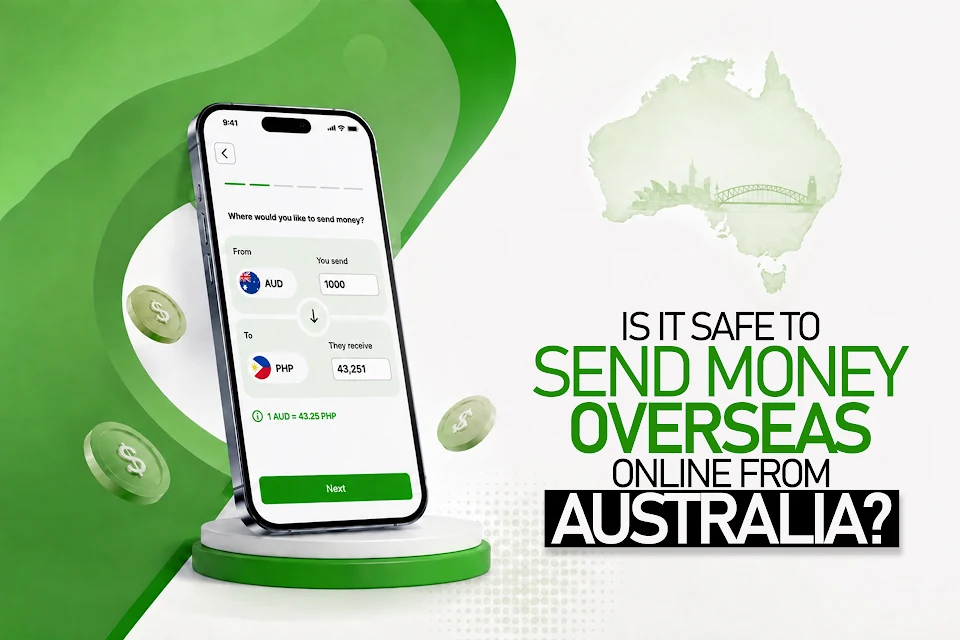
Is It Safe to Send Money Overseas Online from Australia?
Yes, sending money overseas online from Australia can be safe when you use a legitimate, registered money transfer provider and take appropriate security precautions. Australian consumers can send international payments through banks and specialist online money transfer services, but it is important to check the provider, exchange rate, fees, and recipient details before confirming a transfer.
Online international money transfers have become a convenient way for Australians to support family overseas, pay international bills, purchase property or services abroad, and manage other cross-border payments. However, because money is being sent across international borders, understanding how to protect yourself from fraud, scams and unexpected costs is essential. Here is what Australians should know before sending money overseas online.
How Do Online International Money Transfers Work in Australia?
An international money transfer allows you to send Australian dollars to a recipient in another country, usually after the funds have been converted into the recipient's local currency. Australians can generally send money overseas using:
- ● an Australian bank
- ● an online money transfer or remittance provider
- ● a mobile money transfer app
- ● selected in-person remittance services
Depending on the provider and destination, the recipient may receive the money in their bank account, digital wallet or through a cash collection service. ASIC's Moneysmart explains that online money transfer businesses can sometimes provide faster or cheaper transfers than traditional banks. However, costs and processing times vary between services.
Are Online Money Transfer Services Regulated in Australia?
One of the most important safety checks is whether the money transfer provider is operating legally in Australia. Money transfer businesses providing remittance services in Australia generally need to be registered with AUSTRAC, the Australian Transaction Reports and Analysis Centre.
AUSTRAC states that businesses must be registered before providing remittance services in Australia. Australians can search the AUSTRAC Remittance Sector Register before using an unfamiliar provider. Registration does not mean a transfer is completely risk-free, but it is an important first check.
Be particularly cautious if a provider cannot clearly identify its Australian business details or does not appear on the relevant register. AUSTRAC also notes that registered remittance providers will generally request identification documents as part of the transfer process. A provider that does not perform appropriate identification checks may warrant additional caution.
What Should You Check Before Sending Money Overseas?
Safety is not only about protecting your account from hackers. You also need to make sure you understand exactly where your money is going and how much the recipient will receive. Before making an international transfer, check the following.
1. Confirm the provider is legitimate
Use a recognised bank or reputable money transfer service. If you are using a remittance provider, check its AUSTRAC registration rather than relying only on advertisements, social media reviews or search results.
2. Check the exchange rate
Money transfer providers can set the exchange rate they offer customers. The rate you receive may therefore differ from the exchange rate you see in financial news or online currency converters. Moneysmart recommends comparing exchange rates because different providers can offer different overall costs.
3. Look at the total fees
A transfer advertised as having a low or zero upfront fee is not necessarily the cheapest. Costs may include:
- ● transfer fees
- ● currency conversion margins
- ● payment method charges
- ● intermediary fees
- ● fees charged to the recipient
Instead of comparing only the advertised transfer fee, check how much foreign currency the recipient will actually receive.
4. Double-check the recipient's details
International transfers can be difficult to reverse once processed. Before confirming a payment, carefully check the recipient's name, bank account details and any required international banking information. If somebody unexpectedly tells you that their payment details have changed, verify the change independently before transferring money.
5. Protect your online account
Use a strong, unique password and enable multi-factor authentication where available. Avoid logging into financial services through unexpected links in emails or text messages.
What Are the Main Risks of Sending Money Overseas Online?
The biggest risks generally come from using an unreliable provider, entering incorrect recipient information, or being tricked into sending money to a scammer. Scammers may impersonate banks, businesses, government agencies, relatives or other trusted people. Some may create a sense of urgency and pressure you to transfer money immediately.
Moneysmart warns that bank impersonation scammers may even tell people to move their funds into a supposedly "safe" account. Be suspicious if someone you do not know asks you to transfer money on their behalf. Scamwatch also advises Australians not to transfer money for someone else, as doing so could potentially involve you in money laundering activity.
Is It Safer to Use a Bank or an Online Money Transfer Provider?
Both can be safe when you use legitimate organisations and follow appropriate security measures. Banks may feel familiar and provide international transfers through existing online banking accounts. Specialist transfer providers, however, may offer different exchange rates, fees, payment methods and transfer speeds.
For those exploring online international money transfer options, Remit5 provides a convenient way to send money overseas while helping users review their transfer details before confirming a payment.
There is no single option that is best for every international payment. Moneysmart recommends comparing providers based on factors including the exchange rate, transfer fees, exchange-rate guarantees, payment method, delivery time and how the recipient receives the funds.
For Australians, the better approach is to compare the total cost, security and suitability of the transfer rather than choosing a provider based on one advertised fee.
What Should You Do If Something Goes Wrong?
If you believe you have transferred money to a scammer or notice an unauthorised transaction, act immediately. Scamwatch recommends contacting your bank or card provider straight away and asking whether the transaction can be stopped.
For a problem involving the transfer service itself, contact the bank or money transfer provider first. Moneysmart notes that if you are dissatisfied with the response and the organisation is a member of the Australian Financial Complaints Authority (AFCA), you may be able to lodge a complaint with AFCA .
ASIC's ePayments Code also provides protections relating to areas such as unauthorised transactions and mistaken internet payments for consumers dealing with organisations that subscribe to the Code.
So, Is Sending Money Overseas Online Safe?
Sending money overseas online from Australia is generally safe when you choose a legitimate provider, confirm the recipient and understand the transfer before approving it. Before sending money, check that the provider is appropriately registered, compare the exchange rate and total fees, verify the recipient's details, and never transfer money because someone is pressuring you to act urgently.
A few extra checks before pressing Send can help protect both your money and your personal information while making international transfers more secure and predictable.