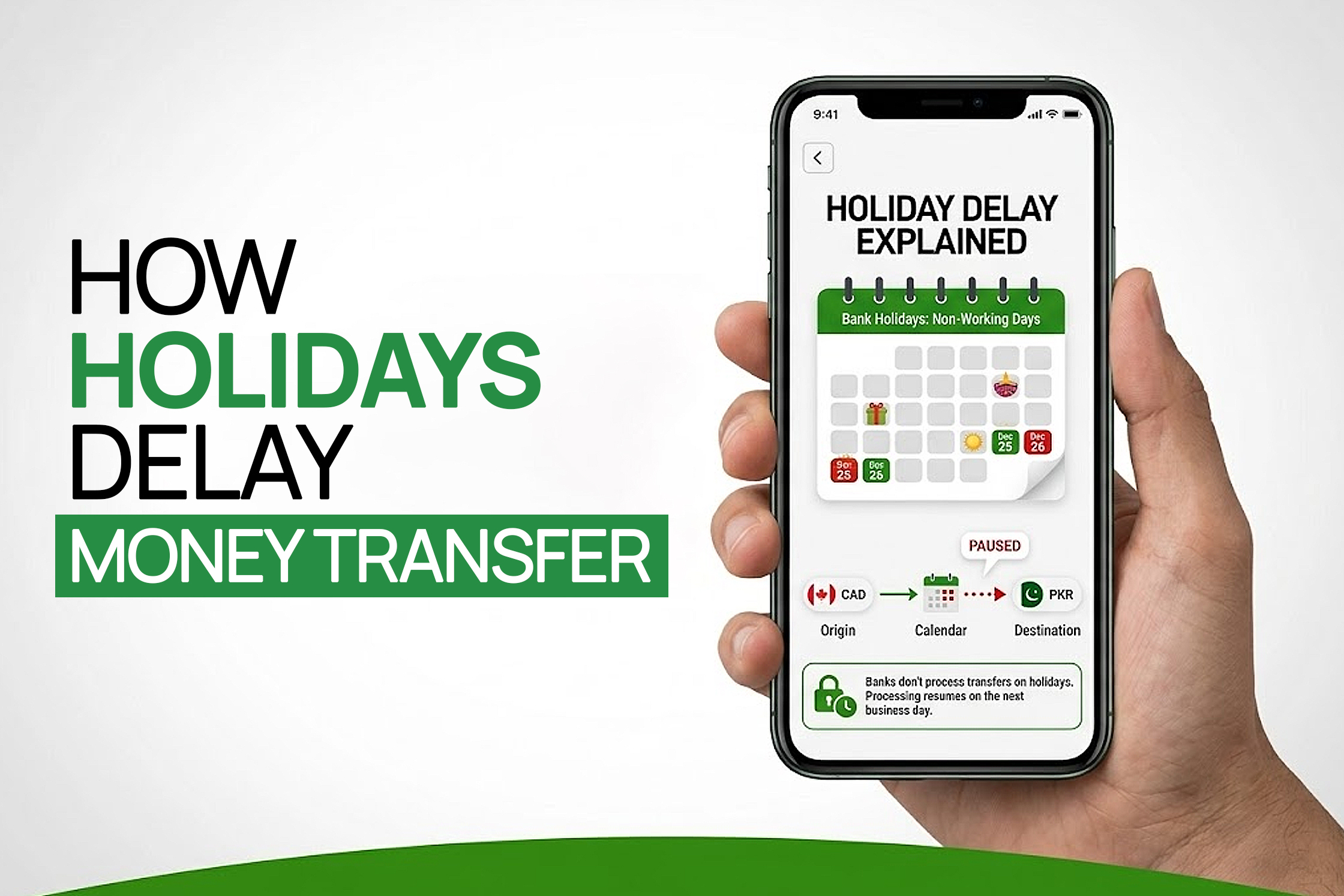
How Indian Bank Holidays Affect International Transfers from Canada
Sending money from Canada to India is usually a simple process. You choose a transfer provider, enter the recipient's details, pay in Canadian dollars, and wait for the money to arrive. However, Indian bank holidays can sometimes delay international transfers. This may be stressful when the money is needed for rent, medical expenses, education, family support, or an urgent bill.
Understanding how bank holidays affect a Canada-to-India money transfer can help you plan and avoid unexpected delays.
What Is an Indian Bank Holiday?
India does not follow one identical bank holiday calendar across the entire country. Some holidays are observed nationwide, while others apply only to certain states or cities.
A bank in Delhi may be open while a branch in Maharashtra, Punjab, or West Bengal is closed for a regional holiday. Indian banks are also generally closed on Sundays and on the second and fourth Saturdays of each month.
This is why Canadian residents sending money to India should check the holiday calendar for the recipient's state, not just the national holiday list.
Regional holidays are especially important when the recipient plans to collect cash from a bank branch or local agent.
How Does a Transfer from Canada to India Work?
An international money transfer usually passes through several stages before reaching the recipient.
First, the provider receives your payment in Canada. It may then verify your identity, review the transaction, convert Canadian dollars into Indian rupees, and send payment instructions to a bank or transfer partner in India.
The Indian partner deposits the money into the recipient's account or makes it available for cash pickup.
A holiday may affect only one part of this process. You may still be able to submit a transfer online, but it could remain pending while a bank, compliance team, or cash pickup location is closed.
Do Bank Holidays Delay Direct Deposits?
India uses electronic payment systems such as NEFT, RTGS, IMPS, and UPI. These systems allow many domestic payments to be processed outside normal banking hours, including weekends and some public holidays.
However, this does not mean every international transfer to India will arrive instantly. The Indian payment system may handle only the final part of the transaction. Before reaching that stage, your Canadian payment must be received, approved, converted, and released by the transfer provider.
If manual verification or partner-bank processing is required, the transfer may wait until the next business day.
A direct bank deposit can therefore still be delayed during a holiday, even when India's domestic payment network is operating.
How Holidays Affect Bank Wires
Traditional international bank wires often take longer than digital money transfers because they may involve several financial institutions.
A bank wire may pass through your Canadian bank, one or more intermediary banks, and the recipient's Indian bank. Each institution may have different cutoff times, weekends, and holiday schedules.
For example, a wire submitted late on Friday may not begin processing until Monday. If Monday is a bank holiday in the recipient's state, the transfer may be delayed again.
For urgent payments, check the estimated delivery date before choosing a traditional wire transfer.
How Cash Pickup Transfers Are Affected
Cash pickup transfers depend heavily on branch and agent opening hours.
Even if the electronic transfer is complete, the recipient cannot collect the funds when the selected location is closed. Some agents may also operate shorter hours around major festivals and public holidays.
Before selecting cash pickup, ask the recipient to confirm the location's opening hours. For urgent transfers, a bank deposit may be more convenient when the recipient has an active account.
Other Reasons a Transfer May Be Delayed
A bank holiday is not the only reason a transfer may take longer than expected.
Common causes include incorrect recipient details, additional identity verification, fraud checks, delayed payment from the Canadian bank, currency conversion processing, and intermediary-bank delays.
First-time transfers and unusually large payments may require extra review. The provider may ask for identification, proof of income, the source of the funds, or the reason for the transfer.
If this review happens near a public holiday, the delay may be longer because fewer employees are available.
How Long Does a Transfer Take During a Holiday?
Delivery times vary by provider, payment method, and recipient bank.
Some digital transfers may arrive within minutes or hours. Others may take one or more business days. Traditional international wires can take several business days, especially when intermediary banks are involved.
Before confirming a transfer, check whether the provider's delivery estimate is based on calendar days or business days. Weekends and holidays in both Canada and India may affect the final arrival time.
When Is the Best Time to Send Money?
For planned payments, send the money at least one or two business days before it is needed.
Allow more time before major festivals, long weekends, tuition deadlines, medical payments, or family events.
To reduce the chance of delays:
- ● Send earlier in the week.
- ● Avoid sending urgent payments late on Friday.
- ● Check holidays in Canada and India.
- ● Confirm the holiday calendar for the recipient's state.
- ● Review the estimated delivery date.
- ● Keep identification documents ready.
Planning is particularly important during Diwali, Holi, Eid, Christmas, and major regional festivals.
Check the Recipient's Bank Details
Incorrect banking information is a common cause of international transfer delays.
Before sending money from Canada to India, confirm the recipient's full name, bank account number, bank name, IFSC code, branch details, and account type.
The recipient's name should match the name registered with the bank. Even a small mistake can result in the payment being rejected, returned, or sent for manual review.
Correcting an error during a bank holiday may take additional time.
Compare Fees and Exchange Rates
Transfer speed is important, but so is the final cost.
When comparing money transfer services, review both the transfer fee and the CAD-to-INR exchange rate. A provider may advertise low fees while offering a less competitive exchange rate.
The best way to compare services is to look at the final amount of Indian rupees the recipient will receive after all fees and exchange-rate margins.
Also check whether the exchange rate is locked when you confirm the transfer or calculated later.
What to Do If Your Transfer Is Pending
Start by checking the provider's transfer tracker and estimated delivery date.
A pending status may mean the company is waiting for your payment, reviewing documents, completing security checks, converting the currency, or sending the money to its Indian partner.
Verify the recipient's details and contact customer support if the estimated delivery time has passed. Keep the transfer reference number, amount, date, and recipient information ready.
Final Thoughts
Indian bank holidays do not stop every international money transfer. Many electronic payment systems continue operating during weekends and holidays.
However, Canadian payment processing, compliance reviews, partner-bank approvals, traditional bank wires, and cash pickup services may still follow business-day schedules.
Before you send money from Canada to India, check the holiday calendars in both countries, verify the recipient's details, compare the CAD-to-INR exchange rate, and leave enough time for processing. A little planning can help your money arrive when it is needed most.