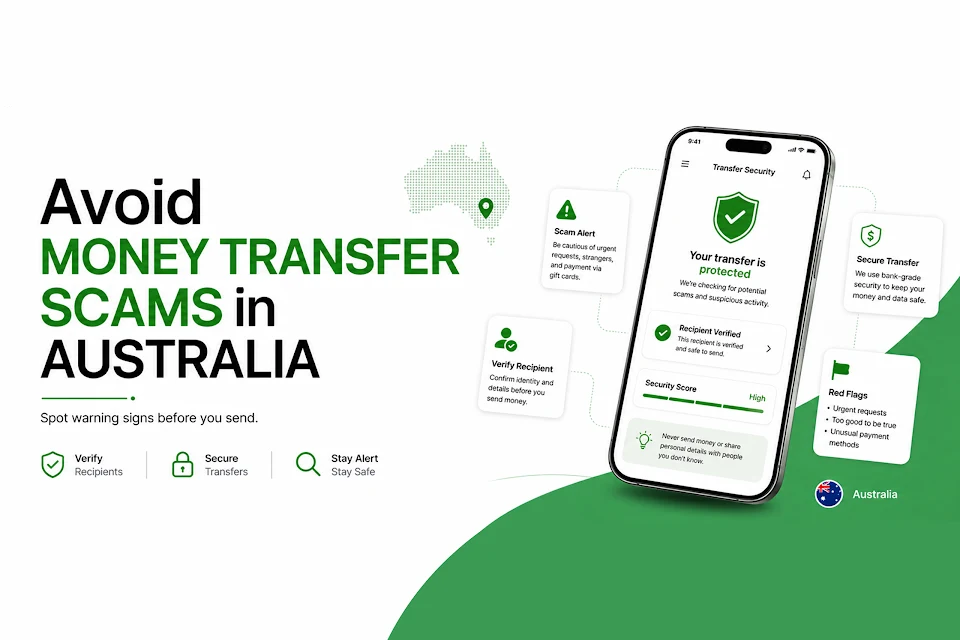
Common International Money Transfer Scams in Australia
International money transfers are a convenient way for Australians to send funds overseas for family support, education, travel, business payments, property expenses and other personal needs. However, scammers also use international payments to move stolen money quickly, which can make recovery difficult once a transfer has been completed.
The most common international money transfer scams in Australia include impersonation scams, romance scams, fake investment schemes, invoice redirection, fake prizes, online shopping scams and money mule scams. Many of them rely on the same tactics: pretending to be someone trustworthy, creating urgency and using emotion to pressure you into sending money. Australian scam authorities identify impersonation, urgency and emotion as three core methods commonly used by scammers.
Knowing what to look for before sending money overseas can help you avoid becoming a victim.
Quick Answer: How Can You Avoid International Money Transfer Scams?
Before sending money internationally from Australia, always verify the recipient, confirm their bank details independently and question unexpected or urgent requests for payment.
Be cautious if someone asks you to:
- ● transfer money immediately
- ● send funds to a new or unfamiliar account
- ● keep the payment secret
- ● pay an upfront fee to receive money
- ● invest with guaranteed high returns
- ● transfer money on behalf of another person
- ● share passwords or security codes
- ● move your money into a so-called safe account
If anything about the request seems unusual, stop the transfer until you can verify it.
1. Impersonation Scams
Impersonation scams occur when criminals pretend to be a person or organisation you trust. You might receive a phone call, email or text claiming to be from a government agency, financial institution, business or family member. The scammer may tell you that your account has been compromised and instruct you to transfer your money to another account for protection.
This is a major warning sign.
ASIC has warned Australians about scammers falsely claiming that funds are at risk and asking people to move money into supposed secure accounts. ASIC states that it will not ask people to transfer money between bank accounts.
How to protect yourself
Do not use the phone number or link provided in the suspicious message. Contact the organisation directly using contact information you find independently.
2. Romance and Relationship Scams
Romance scams can begin on dating websites, social media, gaming platforms or messaging apps. The scammer develops an online relationship and works to gain your trust. After establishing an emotional connection, they may say they need money for an emergency, medical bill, travel expense or family problem.
Some relationship scammers eventually introduce fake investment opportunities as well. Scamwatch warns that relationship scammers can spend long periods building trust before asking victims for money or convincing them to transfer funds into fraudulent investments.
Warning signs of a romance scam
Be cautious if someone you have only met online:
- ● repeatedly avoids meeting you
- ● asks for financial assistance
- ● claims to have frequent emergencies
- ● asks you to transfer money overseas
- ● encourages you to invest through an unfamiliar platform
Never send money simply because you feel emotionally pressured to help.
3. Fake Investment Scams
Investment scams are another serious financial risk for Australians. A scammer may advertise an investment involving cryptocurrency, foreign exchange, shares, property or another financial product. The offer often promises impressive returns with little or no risk.
Fraudulent investment websites can look professional. They may show fake account balances, investment profits and transaction histories to convince you that your money is growing. Some scammers even allow victims to make a small withdrawal initially. This helps create trust before they encourage a much larger transfer.
Scamwatch states that Australians lose more money to investment scams than any other scam category and warns that scammers commonly use convincing websites, marketing and pressure tactics.
How to avoid investment scams
Be suspicious of:
- ● guaranteed profits
- ● unusually high returns
- ● pressure to invest immediately
- ● unsolicited investment advice
- ● requests to send funds to unfamiliar overseas accounts
Always research an investment independently before sending money.
4. Invoice and Payment Redirection Scams
Australian businesses that make international payments can be targeted by invoice redirection scams. A scammer may impersonate a genuine overseas supplier and tell your business that its bank details have changed. You may then receive an invoice containing a new account number.
If the payment is sent, the money goes to the scammer rather than the legitimate supplier. These scams can be difficult to detect because criminals may copy real email signatures, invoices and previous conversations.
How businesses can protect themselves
Whenever a supplier changes its bank details:
- Contact the supplier directly
- Use a phone number you already have on record
- Confirm the account details verbally
- Do not rely only on the email requesting the change
A simple verification call could prevent a significant financial loss.
5. Fake Prize, Refund and Inheritance Scams
Have you unexpectedly been told that you won a prize, inherited money or are entitled to a large refund? Be cautious.
Scammers commonly tell victims that money is waiting for them but that a payment must be made before it can be released. The fee might be described as:
- ● a transfer charge
- ● legal fees
- ● government taxes
- ● processing costs
- ● administration fees
After you make the first payment, another fee may appear. A genuine unexpected payment should not require you to repeatedly transfer money to unfamiliar individuals or overseas accounts.
6. Online Shopping Scams
Australians purchasing products from overseas sellers may also encounter fake stores and online marketplaces. A fraudulent website may advertise popular products at extremely low prices. After you make the international payment, the product never arrives.
Other scammers may provide fake tracking information or disappear once the payment has been received.
Signs of an online shopping scam
Look out for:
- ● prices that seem unrealistically low
- ● newly created or suspicious websites
- ● limited contact information
- ● pressure to pay quickly
- ● unusual international payment instructions
- ● a seller who refuses normal verification
Research unfamiliar sellers before sending money overseas.
7. Money Mule Scams
Money mule scams work differently because you may not initially be asked to send your own money. Instead, someone asks you to receive funds into your bank account and then forward the money to another person or international account. You may even be offered a commission.
The arrangement may be described as payment processing, financial administration or an easy work-from-home job. However, the funds could come from fraud or other criminal activity.
Never allow strangers to use your bank account to receive and forward money.
8. Family Emergency Scams
Family emergency scams are designed to make you panic and act quickly. You might receive a message that appears to be from your child, parent, friend or relative saying they have:
- ● lost their phone
- ● been stranded overseas
- ● had an accident
- ● been arrested
- ● experienced an urgent financial problem
They then ask you to transfer money immediately. Before sending anything, contact your family member using a different phone number or communication method. Scammers frequently rely on urgency because they do not want you to have enough time to verify their story.
What Are the Biggest Warning Signs of a Money Transfer Scam?
There is no single sign that identifies every scam, but certain behaviours should immediately make you more cautious.
A money transfer request could be suspicious if:
- ● the payment is unexpected
- ● you are being pressured to act quickly
- ● the recipient's bank details suddenly change
- ● you are asked to keep the payment confidential
- ● someone promises guaranteed financial returns
- ● you have never met the recipient
- ● additional fees keep appearing
- ● someone asks you to transfer money through your own account
- ● you are discouraged from contacting your bank
- ● you are told your money must be moved for security reasons
When several of these warning signs appear together, do not send the money until you have verified the situation.
How Do I Check If an International Money Transfer Request Is Genuine?
The safest approach is independent verification. Do not verify the request using information supplied by the person asking for money.
For example, if an overseas supplier emails you with new bank details, contact the supplier using a phone number from your existing records. If a family member suddenly asks for emergency funds, call them using the number you normally use.
You should also double-check:
- ● recipient name
- ● bank account details
- ● country
- ● reason for payment
- ● payment amount
Taking a few extra minutes before sending money can prevent a much larger problem later.
Can an International Money Transfer Be Reversed After a Scam?
Sometimes, but there is no guarantee. Whether an international transfer can be stopped or recovered depends on factors such as how the payment was made, how quickly you report it and whether the funds have already been withdrawn or transferred elsewhere.
If you believe you have sent money to a scammer, contact your financial institution or money transfer provider immediately. Do not continue sending additional payments even if the scammer claims another transfer is required to recover your original money. Recovery scams can target people who have already lost money once. ASIC has warned about scammers pretending to help victims recover lost funds while requesting further payments.
What Should You Do After Sending Money to a Scammer in Australia?
Act quickly.
Contact your bank or transfer provider and explain that you believe the transaction was fraudulent.
You should also:
- ● stop communicating with the scammer
- ● stop making further payments
- ● change passwords if account details were shared
- ● monitor your accounts for unusual transactions
- ● save screenshots, emails and messages
- ● keep transfer receipts and recipient details
- ● report the incident through the appropriate Australian scam and cybercrime reporting channels
Keeping detailed records may help when the transaction is investigated.
Are International Money Transfers Safe in Australia?
Yes, international money transfers can be safe when you use a secure transfer service and verify the recipient carefully.
The transfer itself is not always the source of the problem. In many scams, victims are manipulated into willingly sending money to someone pretending to be legitimate.
Before making any overseas transfer, ask yourself:
- ● Do I know who I am sending money to?
- ● Have I independently confirmed the recipient's details?
- ● Is anyone pressuring me to send the money immediately?
- ● Does the reason for the payment make sense?
If you are uncertain about any of these questions, delay the transfer and investigate further.
Frequently Asked Questions
What is the most common type of money transfer scam in Australia?
Australians can encounter many types of financial scams, including impersonation, investment, relationship and payment redirection scams. The exact methods change over time, but urgency, impersonation, and emotional manipulation are common across many scams.
Should I send money to someone I have only met online?
You should be extremely cautious. Verify the person's identity independently and understand exactly why the payment is required before sending money.
Is it suspicious if someone changes their bank details?
Not necessarily, but any unexpected change in payment details should be verified independently before you transfer money.
Can scammers create convincing websites and messages?
Yes. Scammers can copy branding, create professional-looking websites and impersonate legitimate organisations. ASIC continues to warn Australians about sophisticated impersonation and investment scams.
What should I do if someone tells me to move my money to a safe account?
Do not transfer the money immediately. Independently contact your financial institution or the organisation supposedly contacting you. Requests to transfer funds to a supposedly secure account are a known scam tactic.
Final Thoughts
International money transfer scams in Australia can take many forms, but most depend on one thing: convincing you to send money before you have enough time to verify the request.
Before making an international payment, check the recipient, independently confirm payment details, and question anything that appears unusual, urgent or too good to be true.
A few minutes of verification can make a significant difference when protecting your money.
When you are ready to send money overseas, Remit5 provides a safe, secure and convenient international money transfer service for customers in Australia, helping make international payments simple, transparent and reliable.